
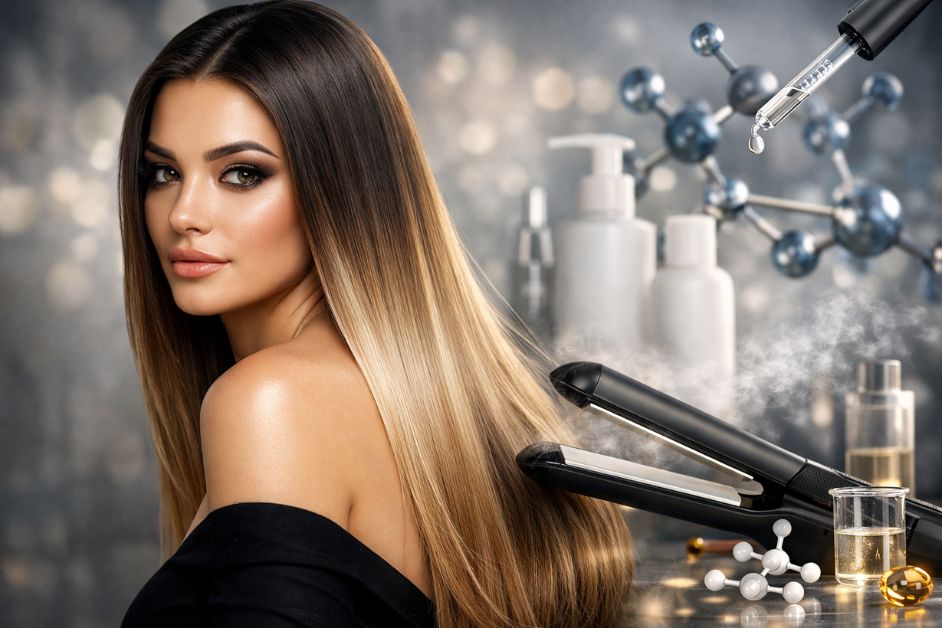
If you’ve been searching for a formaldehyde-free hair straightening treatment that delivers long-lasting smoothness without harsh chemicals, you’ve probably come across nanoplasty. But what exactly is nanoplasty hair treatment — and is it really better than keratin?
This complete Australian guide explains how nanoplasty works, how long it lasts, how much it costs in Australia, whether it damages hair, and how it compares to keratin, hair botox, and Japanese straightening.
Quick Answer: What Is Nanoplasty Hair Treatment?
Nanoplasty is a long-lasting hair smoothing and straightening treatment that uses nano-sized amino acids and organic acids to penetrate the hair fibre, reduce frizz, and straighten hair for up to 6–8 months. Unlike some traditional keratin treatments, it is typically formaldehyde-free and works by restructuring the hair from within rather than coating it.
What Is Nanoplasty Hair Treatment?
Nanoplasty is an advanced hair straightening system developed as a safer alternative to older chemical smoothing treatments.
The term “nano” refers to nano-molecular technology — meaning the active ingredients are small enough to penetrate deep into the hair cortex instead of just coating the surface.
Most nanoplasty formulas contain:
- Amino acids
- Collagen
- Organic acids (such as acetic or lactic acid)
- Plant-based proteins
- Nourishing oils
When activated with heat, these ingredients temporarily reshape the hair’s internal structure, resulting in:
- Reduced frizz
- Straighter texture
- Increased shine
- Improved softness
Unlike chemical relaxers, nanoplasty does not permanently break disulfide bonds in the hair. Instead, it realigns the hair structure more gently.
How Does Nanoplasty Work? (Step-by-Step)
Understanding how nanoplasty works helps explain why it lasts longer than many smoothing treatments.
Step 1: Hair Assessment
A stylist evaluates your hair type, porosity, previous chemical treatments, and desired outcome.
Step 2: Application
The nanoplasty solution is applied section by section.
Step 3: Processing Time
The treatment sits for 40–90 minutes, allowing the nano-particles to penetrate the hair fibre.
Step 4: Heat Sealing
Hair is blow-dried and flat-ironed at controlled high temperatures (usually 210–230°C). Heat activates the organic acids and locks in the restructuring effect.
Step 5: Final Rinse and Style
Depending on the formula, hair may be rinsed the same day and styled immediately.
Why It “Grows Out”
Unlike some keratin treatments that fade gradually, nanoplasty often grows out with new hair growth, leaving treated lengths smooth while natural roots appear over time.
Nanoplasty vs Keratin: What’s the Real Difference?
This is one of the most searched comparisons.
| Feature | Nanoplasty | Traditional Keratin |
|---|---|---|
| Formaldehyde | Usually No | May contain or release |
| Longevity | 6–8 months | 3–4 months |
| Works Inside Hair? | Yes | Mostly surface coating |
| Straightening Strength | High | Moderate |
| Grow-Out Effect | Yes | Fades gradually |
| Suitable for Bleached Hair | Often yes (with caution) | Risk varies |
While modern keratin treatments have improved, nanoplasty is often marketed as a cleaner, longer-lasting option.
Nanoplasty vs Hair Botox vs Japanese Straightening
To fully understand nanoplasty, it helps to compare it with other smoothing treatments.
Nanoplasty
-
Long-lasting straightening
-
Formaldehyde-free formulas common
-
Deep penetration
-
Suitable for most hair types
Hair Botox
-
Primarily conditioning treatment
-
Reduces frizz but doesn’t fully straighten
-
Lasts 2–4 months
Japanese Thermal Straightening
-
Permanent bond-breaking treatment
-
Very straight results
-
Higher risk of damage
-
Permanent until hair grows out
Brazilian Blowout
-
Shorter-term smoothing
-
Often requires strict aftercare
-
May contain chemical aldehydes
Nanoplasty sits between keratin and Japanese straightening — offering strong smoothing without permanent chemical restructuring.
Benefits of Nanoplasty Hair Treatment
✔ Long-Lasting Results
Most Australian salons report 6–8 months of smoothness, depending on hair type and aftercare.
✔ Frizz Elimination
Nanoplasty can reduce frizz by up to 90–100%, making it ideal for humid climates.
✔ Humidity Resistance
This makes it particularly appealing in cities like Sydney or Brisbane where moisture levels fluctuate seasonally.
✔ Deep Shine
By sealing the cuticle layer, nanoplasty increases light reflection — resulting in glossy, glass-like hair.
✔ Time-Saving
Many clients report reduced blow-dry time and easier styling.
✔ Suitable for Coloured Hair
When performed correctly, it can be compatible with bleached or highlighted hair.
Are There Any Risks or Side Effects?
Unlike promotional salon blogs, it’s important to understand potential downsides.
⚠ Heat Damage Risk
High-temperature flat ironing can cause damage if not done correctly.
⚠ Colour Lifting
Organic acids and heat may slightly lift artificial colour, especially reds or pastels.
⚠ Over-Processing
Repeated treatments too close together may weaken hair.
⚠ Not Ideal for Extremely Damaged Hair
If hair is severely compromised, a strengthening treatment may be needed first.
⚠ Pregnancy Considerations
Although many formulas are formaldehyde-free, always consult your doctor before undergoing any chemical treatment during pregnancy.
Nanoplasty is generally considered safe when performed by trained professionals, but it is not entirely risk-free.
Is Nanoplasty Safe?
Nanoplasty is considered safer than older straightening systems primarily because:
-
It avoids formaldehyde and harsh aldehydes
-
It does not permanently break hair bonds
-
It includes conditioning ingredients
However, safety depends on:
-
Stylist experience
-
Correct temperature control
-
Hair condition assessment
-
Proper ventilation
Always ask your stylist about the specific product brand being used.
Who Should Get Nanoplasty?
Nanoplasty may be ideal for:
-
Very frizzy hair
-
Thick or coarse curls
-
Colour-treated hair
-
Professionals wanting low-maintenance styling
-
People in humid climates
It may not be ideal for:
- Those who frequently switch between curly and straight styles
- People with extremely fragile, over-bleached hair
- Anyone seeking permanent straightening
How Long Does Nanoplasty Last?
On average, nanoplasty lasts 6–8 months.
Factors affecting longevity:
- Washing frequency
- Sulfate exposure
- Hard water
- Heat styling habits
- Hair porosity
Using sulfate-free, sodium-free shampoos significantly extends results.
How Much Does Nanoplasty Cost in Australia?
Nanoplasty is considered a premium salon treatment.
Typical Australian price ranges:
- Short hair: $350–$450
- Medium length: $450–$600
- Long/thick hair: $600–$900
Prices vary depending on:
- Hair length and density
- Product brand used
- Salon location
- Stylist expertise
Metropolitan salons in Sydney or Melbourne may charge more than regional areas.
Aftercare: How to Maintain Nanoplasty
To maximise longevity:
✔ Use sulfate-free shampoo
✔ Avoid sodium chloride products
✔ Limit clarifying shampoos
✔ Rinse hair after swimming
✔ Use heat protectant when styling
✔ Deep condition weekly
While nanoplasty allows immediate washing in many cases, following professional advice is essential.
Does Nanoplasty Damage Hair?
Nanoplasty does not chemically break hair bonds like relaxers. However:
-
Excessive heat can cause dryness
-
Incorrect application can cause brittleness
When applied correctly, many users report hair feels healthier due to conditioning ingredients.
The key factor is professional application.
What to Expect After Treatment
Immediately after nanoplasty:
-
Hair feels ultra-smooth
-
Frizz disappears
-
Shine increases dramatically
After first wash:
-
Texture remains straight or softly waved
-
Blow-drying becomes easier
Over months:
-
Natural roots grow in
-
Treated lengths remain smooth
-
Touch-up may be needed at 6–8 months
Frequently Asked Questions
Can I curl my hair after nanoplasty?
Yes. You can use curling tools, but your natural curl pattern may not fully return until the treatment grows out.
Is nanoplasty permanent?
No. It gradually grows out as new hair grows in.
Can I do nanoplasty at home?
Professional application is strongly recommended due to high heat requirements.
Can it lighten hair colour?
Slight colour lifting may occur due to heat and organic acids.
How often can I repeat it?
Most stylists recommend every 6–8 months.
Is nanoplasty safe for curly hair?
Yes. It is commonly used to straighten curly and coily textures.
Final Verdict: Is Nanoplasty Worth It?
Nanoplasty is one of the most advanced smoothing treatments currently available in Australian salons. It offers:
- Long-lasting results
- Reduced frizz
- Formaldehyde-free formulas
- Shine and manageability
However, it requires:
- Skilled application
- Proper aftercare
- Investment in professional service
If you want smoother, low-maintenance hair for up to 8 months without committing to permanent chemical straightening, nanoplasty may be a strong option.
Before booking, always consult a trained stylist and discuss your hair history to ensure the treatment is suitable for you.