
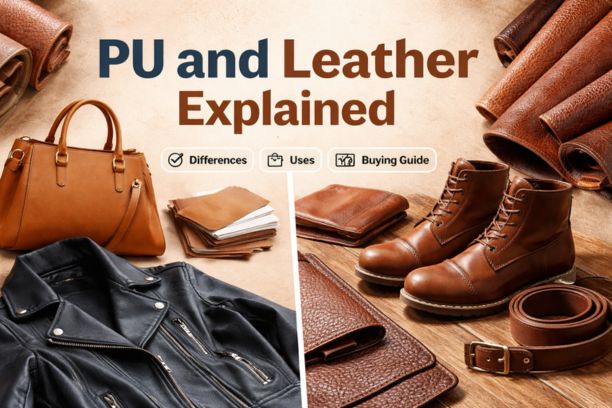
If you’ve ever shopped for a bag, jacket, sofa, or pair of shoes, you’ve likely seen the term “PU and leather” in product descriptions. For many buyers, this phrase creates confusion. Is PU leather real leather? Why are both terms mentioned together? Which material is better?
This comprehensive guide answers every important question around PU and leather — what they are, what they’re made of, how they differ, and how to choose the right one for your needs. By the end, you’ll be able to read product labels confidently and make smarter buying decisions.
What Does “PU and Leather” Mean?
The phrase “PU and leather” generally refers to products made using polyurethane (PU) leather, genuine leather, or a combination of both.
-
PU leather is a synthetic, man-made material
-
Leather refers to natural animal hide
When brands use the term together, it often means:
-
Some parts are real leather, others are PU leather
-
Or the product is PU-coated leather
-
Or the seller is using marketing-friendly wording to appeal to a wider audience
This terminology is common in fashion, furniture, automotive interiors, and accessories.
Key takeaway: “PU and leather” does not automatically mean full genuine leather.
What Is PU Leather Made Of?
PU leather, also known as polyurethane leather, is a synthetic leather alternative designed to mimic the look and feel of real leather.
Materials Used in PU Leather
PU leather is made from:
- A fabric base (usually polyester or cotton)
- A polyurethane coating applied to the surface
The polyurethane layer gives PU leather its smooth finish, water resistance, and leather-like appearance.
How PU Leather Is Manufactured
- A textile base is prepared
- Polyurethane is applied in liquid form
- The surface is textured to resemble leather grain
- The material is cured and dyed
This process allows manufacturers to control texture, color, and consistency.
Types of PU Leather
- 100% PU leather – fully synthetic
- Semi-PU leather – thinner PU coating over fabric
- PU-coated leather – real leather base with a PU finish
Each type differs in durability, feel, and price.
What Is Genuine Leather Made Of?
Genuine leather is a natural material made from animal hide, most commonly cattle.
Common Animal Hides Used
- Cowhide (most common)
- Sheepskin
- Goatskin
- Lambskin
Types of Genuine Leather
Understanding leather grades is essential:
- Full-grain leather – highest quality, natural grain intact
- Top-grain leather – slightly processed, still premium
- Corrected-grain leather – sanded and treated
- Bonded leather – leather scraps mixed with adhesives (lowest quality)
Not all “leather” products are equal — quality depends heavily on the grade used.
PU Leather vs Genuine Leather: Detailed Comparison
| Feature | PU Leather | Genuine Leather |
|---|---|---|
| Material | Synthetic (polyurethane) | Animal hide |
| Texture | Uniform, consistent | Natural grain |
| Durability | Moderate | High |
| Breathability | Low | High |
| Aging | Peels or cracks | Develops patina |
| Maintenance | Easy | Requires conditioning |
| Price | Affordable | Expensive |
| Ethical Aspect | Vegan | Animal-based |
| Lifespan | 2–5 years | 10–20+ years |
This comparison is one of the most important decision points for buyers.
Why Do Product Labels Say “PU and Leather”?
This wording is often used for mixed-material construction.
Common scenarios include:
- Leather exterior with PU lining
- Leather panels combined with PU trims
- PU-coated genuine leather
- Cost-saving blends
In some cases, the phrase is used loosely for marketing purposes, making it essential for consumers to read detailed descriptions carefully.
Is PU Leather Real Leather or Fake?
PU leather is not real leather.
It is a synthetic leather alternative designed to replicate the appearance of leather without using animal hide. While it may look similar, its composition and aging process are completely different.
That said, PU leather is not inherently “bad” — it simply serves a different purpose.
Is PU Leather Better Than Genuine Leather?
The answer depends on how and where you plan to use it.
When PU Leather Is the Better Choice
PU leather is ideal when:
- Budget matters
- You want a vegan or cruelty-free option
- The item is trend-driven or seasonal
- Easy maintenance is important
- Moisture resistance is needed
Examples: fashion handbags, office chairs, décor items
When Genuine Leather Is the Better Choice
Genuine leather excels when:
- Long-term durability is required
- You want a premium feel
- The item experiences heavy wear
- Aging and patina add value
Examples: leather shoes, jackets, sofas, belts
How to Identify PU Leather vs Real Leather
You can often tell the difference using simple tests:
- Touch test: PU feels plasticky; leather feels warm
- Smell test: Real leather has a natural, earthy scent
- Edge test: PU has clean edges; leather shows fibers
- Water test: Leather absorbs slowly; PU repels
- Label clues: Terms like “man-made material” indicate PU
These small details can prevent costly mistakes.
Durability, Lifespan & Maintenance Comparison
PU Leather Durability
- Lasts 2–5 years
- May peel or crack over time
- Sensitive to heat and humidity
Maintenance: wipe with a damp cloth, avoid harsh cleaners
Genuine Leather Durability
- Can last decades
- Becomes softer with age
- Resistant to wear if maintained
Maintenance: regular conditioning and cleaning
Is PU Leather Waterproof, Breathable & Eco-Friendly?
Waterproof
PU leather is water-resistant but not fully waterproof.
Breathability
PU leather has limited airflow, while genuine leather allows moisture evaporation.
Environmental Impact
PU leather is plastic-based and not biodegradable, while leather involves animal farming and chemical tanning. Neither option is perfect environmentally, but plant-based alternatives are emerging.
Common Products Made from PU and Leather
You’ll commonly see PU and leather used in:
- Handbags and wallets
- Shoes and boots
- Jackets and coats
- Furniture and upholstery
- Car interiors
Manufacturers choose materials based on cost, durability, and design requirements.
PU Leather vs Faux Leather vs Vegan Leather
These terms are often used interchangeably, but they aren’t identical.
- PU leather: polyurethane-based synthetic
- Faux leather: umbrella term for artificial leather
- Vegan leather: marketing term, may include PU or plant-based materials
Always check the material composition rather than relying on labels.
Pros and Cons of PU Leather and Genuine Leather
PU Leather Pros
- Affordable
- Vegan-friendly
- Easy to clean
- Consistent appearance
PU Leather Cons
- Short lifespan
- Low breathability
- Environmental concerns
Genuine Leather Pros
- Durable
- Breathable
- Ages beautifully
- Premium appeal
Genuine Leather Cons
- Expensive
- Requires maintenance
- Animal-based
Which Should You Choose? A Practical Buying Guide
Choose PU leather if:
- You’re buying a fashion-forward item
- Budget is limited
- Maintenance needs to be minimal
- Ethical concerns matter
Choose genuine leather if:
- You want longevity
- Comfort and breathability are priorities
- The item will be used daily
- You value craftsmanship
Your lifestyle and usage should always guide your choice.
FAQs About PU and Leather
Is PU leather bad quality?
No, but it’s designed for short-to-medium use, not decades.
Does PU leather peel?
Yes, especially in hot or humid conditions.
Is PU leather toxic?
Modern PU leather is generally safe but not eco-friendly.
Can PU leather be repaired?
Minor damage can be fixed, but peeling is permanent.
Is genuine leather always expensive?
Prices vary by leather grade and craftsmanship.
Conclusion: PU and Leather — What You Should Know Before Buying
Understanding the difference between PU and leather empowers you as a consumer. PU leather offers affordability and convenience, while genuine leather provides durability and timeless appeal. Neither is inherently better — the right choice depends on your needs, values, and budget.
Always read product descriptions carefully, check material breakdowns, and choose what aligns best with how you’ll actually use the item.