
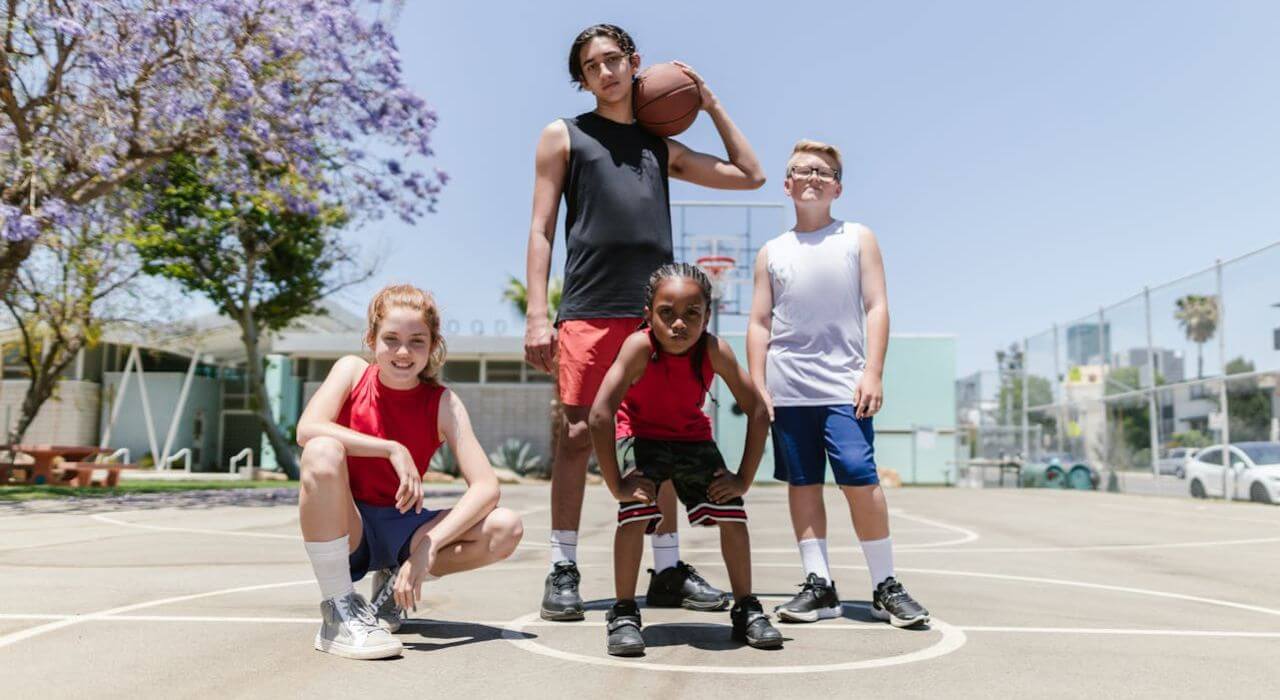
As a parent, you want to give your child the best possible chance to succeed and stay safe on the court. And that all starts from the ground up — with their shoes.
Choosing the right basketball shoe size for kids isn’t just about finding a cool-looking pair; it’s about performance, comfort, and preventing injuries. The wrong fit can slow your child down, cause painful blisters, or even lead to ankle sprains and long-term foot issues.
Let’s break down exactly how to choose the perfect fit so your young player can play better, stay safe, and enjoy the game.
Why the Right Fit Can Make or Break Your Child’s Game
Basketball demands quick starts, sudden stops, explosive jumps, and sharp pivots. A poorly fitting shoe can cause:
- Too loose: Foot sliding inside the shoe → loss of traction, instability, and blisters.
- Too tight: Restricted blood flow → painful pressure points and reduced agility.
The right shoe fit provides:
- Support and cushioning for impact
- Ankle and arch stability for lateral moves
- Enough room for growth without compromising safety
Pro Tip: One of the biggest mistakes parents make is buying a size or two too big, thinking kids will “grow into them.” This can actually increase injury risk.
Step-by-Step Guide: How to Size Kids’ Basketball Shoes Correctly
1. Measure Their Feet Accurately
Never rely on their current street shoe size — every brand fits differently.
- When: Measure in the evening when feet are at their largest.
- Materials: Ruler/tape measure, paper, pen.
- How:
-
-
Have your child stand with weight evenly distributed.
-
Trace both feet on paper.
-
Measure from heel to tip of the longest toe.
-
Use the larger foot’s measurement.
-
Check width at the widest point for narrow/wide fit needs.
-
2. Plan for Growth Without Sacrificing Performance
Kids grow fast, but oversized shoes can cause injuries.
- Rule of Thumb: Allow about ½ inch of space between the longest toe and the end of the shoe.
- This gives enough room for growth without making the shoe clunky or unsafe.
3. The In-Store Try-On Test
If possible, take your child to try the shoes in person.
Bring the Right Socks
-
Use the same athletic socks they’ll wear during games.
Fit Checks:
- Thumb Test: Fit your thumb between the toe and shoe tip (about ½ inch).
- Pinch Test: Pinch across the widest part of the foot. Too much material? Too wide. No give? Too narrow.
- Heel Lock: Have them walk, jump, and pivot. Heel should stay snug with no slipping.
- Feedback: Ask your child — any pinching, rubbing, or discomfort is a no-go.
What to Look For in a Youth Basketball Shoe
When you’ve nailed the fit, check for these performance features:
-
Ankle Support:
-
Low-top: More mobility, less support.
-
Mid-top: Balanced choice for younger players.
-
High-top: Extra ankle stability for injury prevention.
-
-
Traction:
-
Durable rubber outsole
-
Herringbone or multidirectional pattern for strong court grip
-
-
Cushioning:
-
Impact-absorbing midsoles, especially under the heel and forefoot
-
-
Durability:
-
Synthetic leather or reinforced textiles to withstand heavy play
-
The Bottom Line
By following these steps, you can confidently choose a basketball shoe size for kids that supports their game and protects their growing feet. A well-fitted shoe isn’t just gear — it’s an investment in their performance, safety, and love for the sport.
Now it’s your turn: Have a favorite youth basketball shoe brand or sizing tip? Share it in the comments — other parents will thank you!