Physical Address
304 North Cardinal St.
Dorchester Center, MA 02124
Physical Address
304 North Cardinal St.
Dorchester Center, MA 02124

Ever bought a unisex shirt and wondered, “What size am I even supposed to get?” You’re not alone.
With the rise of gender-neutral fashion, unisex clothing has become a go-to for comfort, versatility, and style. But sizing can be tricky — especially if you’re used to men’s or women’s specific fit guides.
In this post, we’ll break down what unisex shirt sizes really mean, how to read a unisex shirt size chart, and how to find your perfect fit — no matter your gender, shape, or style.
Unisex sizing is designed to accommodate a broad range of body types with a single sizing system. However, in practice, most unisex apparel is simply based on men’s sizing standards.
This means:
Why is unisex sizing based on men’s sizing?
Historically, “unisex” clothing was introduced during minimalist fashion trends and was often just men’s clothing marketed as gender-neutral. As a result, many unisex shirts still follow the same patterns and measurements found in men’s garments.
Here’s how unisex sizing compares to traditional men’s and women’s shirts:
| Feature | Men’s Shirt | Women’s Shirt | Unisex Shirt |
|---|---|---|---|
| Cut | Broad shoulders, longer torso | Narrower waist, shorter torso | Straight cut, roomy and boxy |
| Fit Intent | Relaxed or standard fit | Tailored, closer to body | Looser, androgynous fit |
| Sizing Base | True to size for men | Runs smaller than men’s sizes | Follows men’s sizing |
Tip: Women may find unisex shirts longer in the torso and sleeves, while men typically experience a standard or slightly relaxed fit.
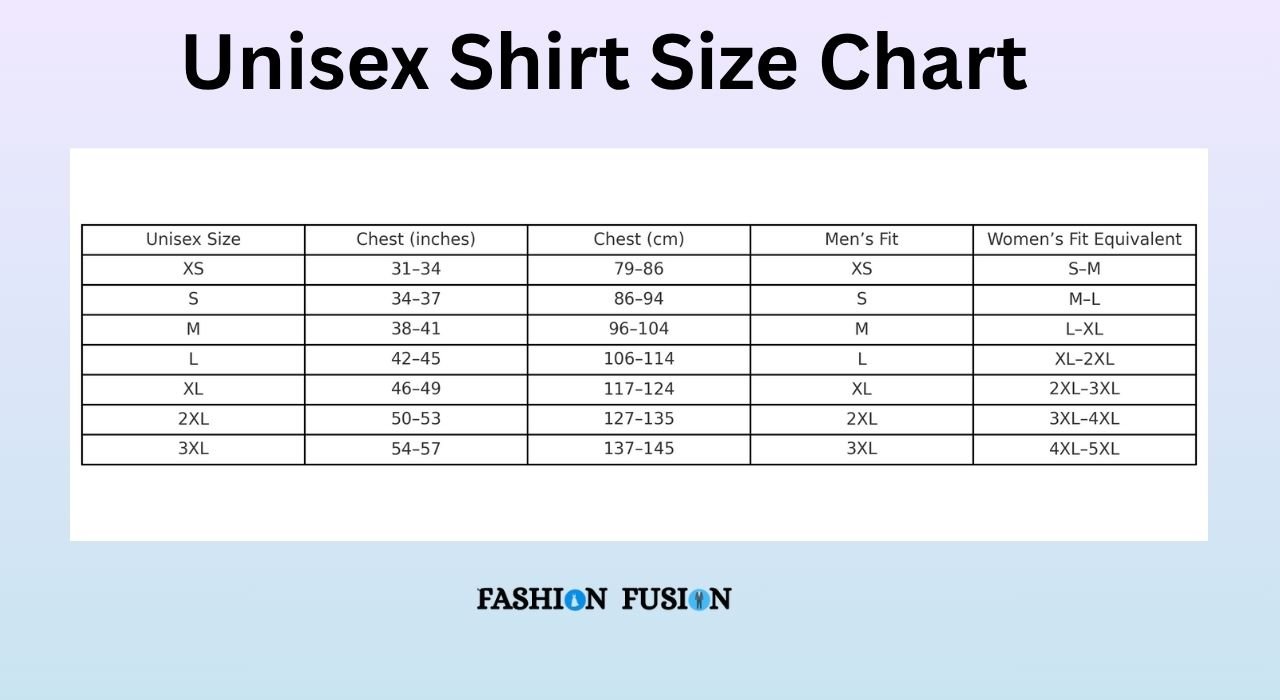
Use this unisex shirt size chart to help determine your best size. Always check the specific brand’s chart when shopping, as sizes can vary slightly.
| Unisex Size | Chest (inches) | Chest (cm) | Men’s Fit | Women’s Fit Equivalent |
|---|---|---|---|---|
| XS | 31–34 | 79–86 | XS | S–M |
| S | 34–37 | 86–94 | S | M–L |
| M | 38–41 | 96–104 | M | L–XL |
| L | 42–45 | 106–114 | L | XL–2XL |
| XL | 46–49 | 117–124 | XL | 2XL–3XL |
| 2XL | 50–53 | 127–135 | 2XL | 3XL–4XL |
| 3XL | 54–57 | 137–145 | 3XL | 4XL–5XL |
Here’s how to make the best decision based on your identity and style preference:
Let’s dive deeper into how unisex shirts wear on different body shapes:
Style Tip: Pair oversized unisex tees with fitted bottoms or structured jackets to balance proportions.
Before you shop, keep these tips in mind:
Men: Stick to your usual size.
Women: Size down 1–2 sizes depending on fit preference.
Yes — particularly cotton ones. Look for pre-shrunk materials or wash carefully.
They can be! Use styling tricks like tucking or adding accessories to shape the silhouette.
Absolutely. A basic tee can easily be taken in, shortened, or reshaped by a tailor.
Unisex shirt sizing is meant to simplify fashion — but only if you understand how it works. By knowing how it compares to men’s and women’s sizes, using a size chart, and paying attention to your own measurements, you can find your best fit with ease.
Whether you love the oversized streetwear look or prefer a cleaner fit, unisex shirts are a versatile staple that suit everyone.