
Introduction: Wedding Planning Without the Overwhelm
Most wedding planning blogs overwhelm couples for one simple reason: they offer too much inspiration and too little direction. Endless ideas, emotional language, and vague advice can make planning feel chaotic instead of exciting.
This guide is designed to do the opposite.
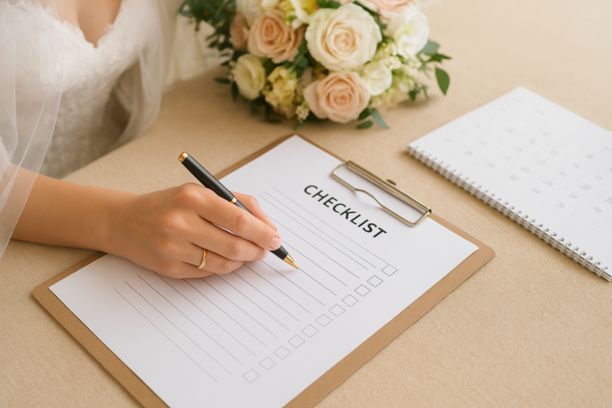
Rather than focusing on trends or fantasy scenarios, this wedding planning checklist is timeline-based and decision-driven. It helps you understand what to do first, what can wait, and why each step matters.
This guide is for engaged couples who:
- Are planning their own wedding
- Want clarity instead of confusion
- Prefer practical advice over emotional filler
How to use this checklist:
- Bookmark or save it for reference
- Work through it section by section
- Revisit each phase as your planning progresses
You don’t need to plan everything at once. You just need to make the right decisions in the right order.
Before You Start: 5 Decisions to Make Before Any Booking
Before you look at venues, vendors, or Pinterest boards, there are five decisions that will shape every part of your wedding. Making these early prevents wasted time, budget regret, and last-minute compromises.
Decide Your Wedding Type
Start with the overall structure of your wedding.
Consider:
- Local vs destination wedding – Will most guests travel?
- Traditional vs non-traditional – Cultural, religious, modern, or mixed?
- One-day vs multi-day celebration – Single event or extended experience?
You don’t need details yet, but you do need alignment. This decision influences venue options, guest expectations, timelines, and costs.
Set an Approximate Guest Count Range
Exact numbers are not required at this stage—but a range is essential.
Create three guest tiers:
- Must-have guests (immediate family, closest friends)
- Nice-to-have guests (extended family, friends)
- Optional guests (if space and budget allow)
Why this matters: guest count directly affects venue size, catering costs, seating, and overall budget. Even a rough estimate gives you control when comparing options.
Identify Your Planning Style
Be honest about how you want to plan.
Ask yourselves:
- Do you enjoy managing details, or does it stress you out?
- Will you plan everything yourselves or hire professional help?
- Do you prefer digital tools or paper planners?
There is no ideal approach—only what works for your lifestyle, time, and stress tolerance.
Do a Budget Reality Check
Your budget is not just a number—it is a decision-making tool.
Before booking anything, discuss:
- How much you can realistically afford
- Whether family contributions are involved (and any expectations attached)
- How flexible your spending limits truly are
A critical principle to understand early:
Venue choice + guest count controls roughly 70% of your wedding decisions.
Clarity here prevents emotional overspending later.
Define Your Non-Negotiables
Trying to have everything usually leads to stress and regret.
Instead, decide:
- Three things you will not compromise on (for example: photography, location, guest experience)
- Three areas you are willing to simplify (for example: decor, favors, extras)
This single exercise will make future decisions faster and far less emotional.
Wedding Budget Breakdown (With Realistic Percentages)
One of the biggest weaknesses in wedding planning content is vague budgeting advice. Clear budgeting gives you confidence, flexibility, and peace of mind.
How Much Do Weddings Really Cost?
There is no universal wedding cost, but most weddings fall into three broad ranges:
-
Low-budget weddings – Smaller guest lists, simplified setups, DIY elements.
-
Mid-range weddings – Professional vendors, moderate guest count.
-
High-budget weddings – Premium venues, large guest lists, custom details.
Costs also vary significantly by region, season, and venue type. Instead of comparing yourselves to others, focus on what your budget can realistically support.
Smart Wedding Budget Allocation
While every wedding is different, most budgets are typically divided across these categories. Use this table as a starting point to allocate your total budget figure.
Wedding Planning Timeline Checklist (Month-by-Month)
This timeline is the backbone of stress-free wedding planning. Instead of doing everything at once, it breaks the process into clear, manageable phases, so you always know what deserves your attention now and what can wait.
Use this as a flexible guide—not a rigid rulebook. Every wedding is different, but the sequence of decisions matters.
12–18 Months Before the Wedding
This stage is about setting direction and securing limited-availability bookings.
Focus on:
- Finalising your budget range and guest count estimate
- Choosing your preferred wedding season and possible dates
- Researching and booking your venue
- Deciding the ceremony type (religious, civil, symbolic)
Why this phase matters: venues book far in advance, and your venue choice will influence catering, decor, guest count, and overall costs.
9–12 Months Before the Wedding
With the venue secured, move on to high-impact vendors.
Key priorities:
- Book your photographer and videographer
- Hire a wedding planner or coordinator (if applicable)
- Lock in other major vendors tied to availability
- Begin wedding dress research
This is also a good time to start thinking about guest accommodations, especially if many guests are travelling.
6–9 Months Before the Wedding
This phase brings more structure to your plans.
Focus on:
- Finalising your guest list
- Ordering wedding attire and scheduling fittings
- Choosing your decor style and colour palette
Leaving attire or decor decisions too late often results in rushed choices or limited options.
3–6 Months Before the Wedding
Now the details start to come together.
Key tasks:
- Sending wedding invitations
- Booking hair and makeup artists
- Planning ceremony details
- Beginning seating arrangements
At this stage, your wedding day should start to feel clearly defined.
1–3 Months Before the Wedding
This phase is about confirmation, not new decisions.
Focus on:
- Final vendor confirmations
- Final dress fittings
- Creating a detailed day-of timeline
Clear timelines reduce last-minute stress and confusion.
Final 2 Weeks Before the Wedding
The goal now is preparation and peace of mind.
Checklist:
- Prepare an emergency kit
- Organise final payments and tips
- Create and share a vendor contact sheet
Avoid introducing new elements during this period unless absolutely necessary.
Choosing the Right Wedding Venue (Decision-Based Guide)
Your venue is more than a backdrop—it is one of the most influential decisions you’ll make. A well-chosen venue simplifies planning, while the wrong one can create ongoing stress.
Wedding Venue Types Explained
Understanding venue categories helps narrow your options quickly.
Common venue types include:
- Hotels – Convenient, often all-inclusive, suitable for larger guest lists
- Barns – Rustic charm, flexible layouts, often require more coordination
- Destination venues – Ideal for intimate weddings, require guest travel planning
- Private estates – Exclusive and personal, often come with fewer restrictions
- Religious venues – Traditional, structured, often paired with a separate reception site
Each type comes with different cost structures and logistical considerations.
Venue Comparison Checklist
When visiting or comparing venues, look beyond aesthetics.
Evaluate:
- Capacity versus guest comfort
- Weather backup options
- Noise curfews and end times
- Catering restrictions or exclusivity
A venue that photographs well but lacks practical support can create challenges on the day.
Questions Couples Often Forget to Ask Venues
Before signing any contract, make sure you have clear answers to:
- Are there overtime fees?
- What is the setup and breakdown time?
- Are you required to use exclusive vendors?
- How does parking and guest access work?
Asking these questions early prevents unexpected costs and logistical issues later.
Vendors That Matter Most (And How to Prioritize Them)
Not all vendors carry the same weight. One of the biggest planning mistakes Couples make is spreading budget and attention evenly across everything. Instead, prioritising vendors based on impact leads to better results and fewer regrets.
Tier 1 Vendors (Book First)
These vendors shape the core experience of your wedding and should be secured as early as possible.
- Venue – Determines date availability, guest capacity, catering rules, and logistics
- Photographer – Preserves the day long after it ends; style and reliability matter more than trends
- Caterer – Directly affects guest satisfaction and event flow
If your budget needs flexibility, protect these bookings first.
Tier 2 Vendors
These enhance atmosphere and personality but offer more flexibility.
- Florist – Visual impact, especially for ceremony and tables
- Entertainment – DJ or live band sets the energy of the event
- Officiant – Shapes the tone of the ceremony
You can adjust scope or scale here without compromising the entire wedding.
Tier 3 Vendors
These are supportive details rather than defining elements.
- Transportation
- Signage
- Decorative extras and add-ons
If budget pressure arises, this tier is where simplification works best.
Red Flags When Hiring Vendors
Watch for warning signs before signing contracts:
- Lack of clear pricing or deliverables
- Vague timelines or cancellation policies
- Slow or inconsistent communication
Professional vendors provide clarity, not confusion.
Wedding Style, Decor & Theme (Without Pinterest Overload)
Inspiration overload is common—and unnecessary. A strong wedding style comes from clarity, not excess ideas.
How to Define Your Wedding Style in 3 Words
Choose three words that describe how you want the day to feel.
Examples:
- Elegant • Minimal • Modern
- Romantic • Soft • Classic
- Bold • Colourful • Playful
Use these words as a filter for every decor and styling decision.
Color Palette Simplified
A focused palette keeps everything cohesive.
Guidelines:
- Choose 1–2 base colours
- Add 1–2 accent colours
- Consider season and venue surroundings
More colours often create visual noise rather than richness.
Decor Elements That Make the Biggest Visual Impact
Instead of decorating everything, prioritise areas guests notice most:
- Ceremony backdrop or altar
- Lighting (especially for evening weddings)
- Table settings and centrepieces
Concentrated decor always looks more intentional.
Guest Experience Planning (Often Overlooked)
A beautiful wedding is memorable, but a comfortable wedding is appreciated. Guest experience planning focuses on how the day feels for the people attending.
Key areas to consider:
- Arrival logistics – Clear directions, signage, and parking
- Seating comfort – Adequate seating for ceremonies and receptions
- Food timing – Avoid long gaps between meals
- Bathroom access – Sufficient facilities for guest count
- Clear signage – Help guests navigate without confusion
When guests feel looked after, the entire event runs more smoothly.
Wedding Week & Day-Of Master Checklist
This is the phase where planning shifts from decisions to execution. The goal here is not perfection — it’s smooth flow and fewer surprises.
Wedding Week Checklist
- Reconfirm all vendors (time, location, setup needs)
- Finalise and send the day-of timeline to vendors and key people
- Confirm final guest count with venue & caterer
- Prepare final payments, tips, and envelopes
- Pack attire, accessories, vows, rings, and documents
- Assign a trusted point person (or coordinator) for vendor questions
Wedding Day Checklist
Who Handles What
- One person for vendor coordination
- One person for personal items (phone, bag, touch-up kit)
- One person for guest questions
Emergency Kit Essentials
- Safety pins, fashion tape
- Pain relievers
- Blotting papers
- Snacks & water
- Phone charger
- Breath mints
Timeline Buffer Rule
Add a 10–15 minute buffer between every major event. This single step prevents the most common wedding-day stress.
Common Wedding Planning Mistakes (And How to Avoid Them)
Learning from others’ mistakes saves time, money, and emotional energy.
Mistake 1: Booking Before Budget Clarity
Fix: Finalise your budget range before signing any contract.
Mistake 2: Overloading the Schedule
Fix: Prioritise breathing room over back-to-back events.
Mistake 3: Ignoring Guest Comfort
Fix: Think in terms of flow — arrival, seating, food timing, exits.
Mistake 4: Trying to Please Everyone
Fix: Revisit your non-negotiables when outside opinions get loud.
Mistake 5: Skipping a Backup Plan
Fix: Always have a Plan B for weather, delays, and no-shows.
Final Thoughts: A Wedding That Feels Like You
A well-planned wedding isn’t about ticking every box — it’s about intentional decisions made with clarity.
Progress matters more than perfection. Simplicity often creates the most meaningful memories. When you focus on what truly matters to you as a couple, everything else falls into place.
This checklist isn’t meant to control your wedding — it’s meant to support it, so your day feels calm, personal, and genuinely yours.